Path
hns
Contact
Contact name or title
Health & Nutrition Services
Contact phone number
(602) 542-8700

S-EBT SUN Bucks: Information for Administrators and School Leaders

S-EBT SUN Bucks: Information for Administrators and School Leaders

sun-bucks-color logo

Summer Electronic Benefit Transfer Program (Summer-EBT/SUN Bucks) supplements summer meal programs by providing grocery-buying benefits to low-income families with school-aged children who lose access to free or reduced-price school meals through the National School Lunch Program (NSLP) and School Breakfast Program (SBP) when schools are closed for the summer.

Information for Parents 

Please refer to our Summer EBT Webpage: Information for Parents.

Some questions this page will answer: 

  • Will my child automatically receive SUN Bucks in 2026?
  • If my child's school serves all free meals, will they automatically get SUN Bucks?

Submitting Students for 2026 SUN Bucks

The CNP Summer EBT - SUN Bucks portal is live in ADEConnect.

Operational Guidance

HNS 04-2026: Announcing the 2026 Summer EBT SUN Bucks Program and Requirements for School Food Authorities

Quick Guide: How to Report Students for Summer-EBT in the CNP Summer EBT - SUN Bucks Data Portal: This quick guide takes the user through navigating the SUN Bucks portal. 

SUN Bucks & AzEDs: Flow of Student Eligibility Data: This resource outlines the importance of the continued connection and collaboration between the SIS representative and food service by illustrating the connection of AzEDs data to SUN Bucks benefits to families.

SUN Bucks Eligibility Flow Chart: This chart provides a very basic overview of student eligibility requirements for SUN Bucks benefits.

SUN Bucks Benefits: Actions Required by the SFA: This is a resource that outlines the actions required by the SFA for the SUN Bucks administration.  

No Application, No Problem - Flyer: This infographic is to be used by sites operating Special Provision Options (Provision 2, 3 or CEP) to provide access to SUN Bucks benefits for eligible students who attend schools that do not collect Household Applications for Meal Benefits.

Contact Information

If you have any additional questions that aren't answered on these tabs, please refer to the following methods to learn more about SEBT or how to reach out to the Arizona Department of Education. 

SUN Bucks (Summer EBT/S-EBT): Information for Parents

SUN Bucks (Summer EBT/S-EBT): Information for Parents

sun-bucks-color logo

The Summer Electronic Benefit Transfer Program (Summer-EBT/SUN Bucks) provides grocery-buying benefits to low-income families with school-aged children who lose access to free or reduced-price school meals when schools are closed for the summer.


Announcements:

Summer 2026 SUN Bucks benefits have been issued to most eligible households.
Make sure to save the letter and your SUN Bucks EBT card each year. The card does not expire, but unused benefits do. Be sure to use your benefits within 122 days. If you don’t use them, you will lose them. 
 
If you applied online or by mail before the deadline, your application may still be under review. Program staff are actively processing all timely submitted applications. Once processing is complete, applicants will receive written notification regarding their application status.
 
If your child did not receive a Summer 2026 SUN Bucks benefit and you believe they meet all eligibility requirements outlined in the "Will My Child Automatically Receive SUN Bucks in 2026?" section below, please contact the SUN Bucks Hotline at 1-833-648-4406 for assistance.


Will my child automatically receive SUN Bucks in 2026? 

Some children in Arizona will receive SUN Bucks automatically without needing to apply. To see whether your child will receive benefits automatically, please review the criteria below. 

Criteria for automatically receiving SUN Bucks without applying:

If your child was enrolled and attended an Arizona school that participated in the National School Lunch Program (NSLP) or School Breakfast Program (SBP) and had access to a meal service between July 1, 2025 and June 30, 2026 (if unsure, click here): 
 

Your child must also have met at least ONE of the following requirements between July 1, 2025 and August 3, 2026:  
 

  • Individually certified for free or reduced-price meals because you submitted an NSLP household application; OR
  • Received benefits for any amount of time under SNAP, TANF, FDPIR, or an NSLP/SBP participating Head Start program; OR 
  • Received benefits from an income based Medicaid program which meets NSLP free or reduced-price income eligibility guidelines for any amount of time; OR
  • In Foster Care; OR
  • Certified as homeless or as an unaccompanied youth under the McKinney Vento Homeless Assistance Act; OR
  • Certified under the Migrant Education Program.

If your child met ANY of the criteria above, and was enrolled and attended an Arizona NSLP or SBP school for at least one day during the 2025-26 instructional school year, they will automatically be issued SUN Bucks benefits in the summer of 2026. You do not need to apply or take further action to receive benefits.

If your child was enrolled and attended an Arizona school that participates in NSLP or SBP but does not meet the above requirements, you can apply for SUN Bucks (please refer to the "How do I apply for SUN Bucks" section).

If your child was NOT enrolled and did NOT attend an Arizona school that participated in the National School Lunch Program (NSLP) or School Breakfast Program (SBP) between July 1, 2025 and June 30, 2026 (if unsure, click here):

Your child must meet BOTH the age and program eligibility criteria below:

  • The age range requirement for the child: must be six years old by August 3, 2026, or less than sixteen years old before July 1, 2025,

AND

  • Meet at least ONE of the program eligibility criteria below for at least one day between July 1, 2025 and August 3, 2026: 
    • Received benefits for any amount of time under SNAP, TANF, or FDPIR; OR 
    • Received benefits from an income based Medicaid program which meets NSLP free or reduced-price income eligibility guidelines for any amount of time; OR
    • In Foster Care; OR
    • Certified as homeless or as an unaccompanied youth under the McKinney Vento Homeless Assistance Act; OR
    • Certified under the Migrant Education Program.

If your child meets BOTH the age requirement and the program eligibility criteria above, your child will automatically be issued SUN Bucks benefits in the summer of 2026. You do not need to take further action to receive benefits.  

If your child does NOT meet the criteria above, your child is not eligible to apply for SUN Bucks.

If my child's school serves free meals to all students, are they automatically eligible for SUN Bucks? 

No. However, if your child was enrolled and attended a school that participated in the Community Eligibility Provision (CEP) or Provision 2/3 (if unsure, click here) and met at least ONE of the following requirements below between July 1, 2025 and August 3, 2026, they will automatically be eligible for SUN Bucks:

  • Received benefits for any amount of time under SNAP, TANF, FDPIR, or Head Start (NSLP/SBP participating Head Start); OR
  • Received benefits from an income based Medicaid program which meets NSLP income guidelines for any amount of time; OR
  • In Foster Care; OR
  • Certified as homeless or as an unaccompanied youth under the McKinney Vento Homeless Assistance Act; OR
  • Certified under the Migrant Education Program.

If your child does not meet any of the above criteria and attended a CEP or Provision 2/3 school, you can apply for SUN Bucks (please refer to the "How do I apply for SUN Bucks" section).

How do I know if my child is automatically eligible for SUN Bucks based on participation in AHCCCS/Medicaid?

To qualify automatically for SUN Bucks based on participation in AHCCCS/Medicaid, your child’s eligibility is based on household income you provided to AHCCCS, and that income must meet NSLP guidelines for free or reduced-price meals (at or below the 185 percent of the federal poverty level). 

Please consider applying for SUN Bucks if your child receives AHCCCS through SSI Cash, Adoption Subsidy, or Foster Care as eligibility is not based on income and your child is not automatically eligible for SUN Bucks.

If your child is enrolled in KidsCare, your household income is above 185% of the federal poverty level and your child is not automatically eligible for SUN Bucks.

If you are unsure if your child's participation in AHCCCS/Medicaid will automatically qualify for them for SUN Bucks, we strongly recommend you apply. Please refer to the "How do I apply for SUN Bucks" section.

How do I apply for SUN Bucks?

2026 SUN Bucks applications closed on August 3, 2026.
 
If you submitted an online application or mailed one in by the deadline, it may still be under review. Program staff are reviewing all timely submitted applications, and applicants will receive written notification regarding the status of their application once processing is complete.
 
Applications received after August 3, 2026, will be denied.

How will I be receiving my benefits?

A one-time summer benefit amount of $120 will be issued for each eligible child. The eligibility notification letter and the SUN Bucks card (if receiving a new card) will be sent in two separate mailings to the address on file. Ensure mailing address is up-to-date with schools and the Department of Economic Security (DES). 

Once SUN Bucks benefits have been issued, eligible households will receive a letter in the mail, similar to the ones linked below, from DES in a new envelope that says SUN Bucks. Please make sure to review and keep this letter.


SUN Bucks 2026 newly eligible families (those who have not received a SUN Bucks card in summer 2024 or 2025 and are not actively receiving SNAP/TANF benefits) will receive an approval letter and a new SUN Bucks EBT card separately in the mail. It may take several weeks to receive your EBT card in the mail. 
    • Sample letter to households currently receiving SNAP/TANF benefits (English)/(Spanish)
    • Sample letter to households who previously received SUN Bucks (English)/(Spanish)
    • Sample letter to households receiving SUN Bucks benefits (new case builds) (English)/(Spanish)
    • Sample envelope to the household regarding SUN Bucks benefits (Envelope

Where will my SUN Bucks eligibility letter be mailed?
SNAP/TANF households (actively receiving benefits): Sent to the address on file with DES.
AHCCCS households: Families who recently updated their address with the messages sent by AHCCCS will have their letters sent to the newly updated address, otherwise the school address will be used. 
New SUN Bucks applicants: Sent to the address provided on the SUN Bucks application. 
All other eligible families: Sent to the address provided by the student’s school.

What card will my SUN Bucks benefit be issued to? 
In most cases: If you have multiple eligible children in the same household, the benefits for all children will be issued on one card. For households who currently participate in SNAP or TANF, the benefit will be placed on that case. For households who received the SUN Bucks benefit for Summer 2024 or 2025, DES will add the 2026 benefit to the most recent card received.
  
In some cases: Each eligible child in a household might receive a separate card. Additionally, there may be instances when a new card will be mailed even if you received benefits last year. For example, if the eldest child who received the SUN Bucks card for 2025 is no longer eligible and there were other eligible children in the household, a new SUN Bucks EBT card will be mailed.

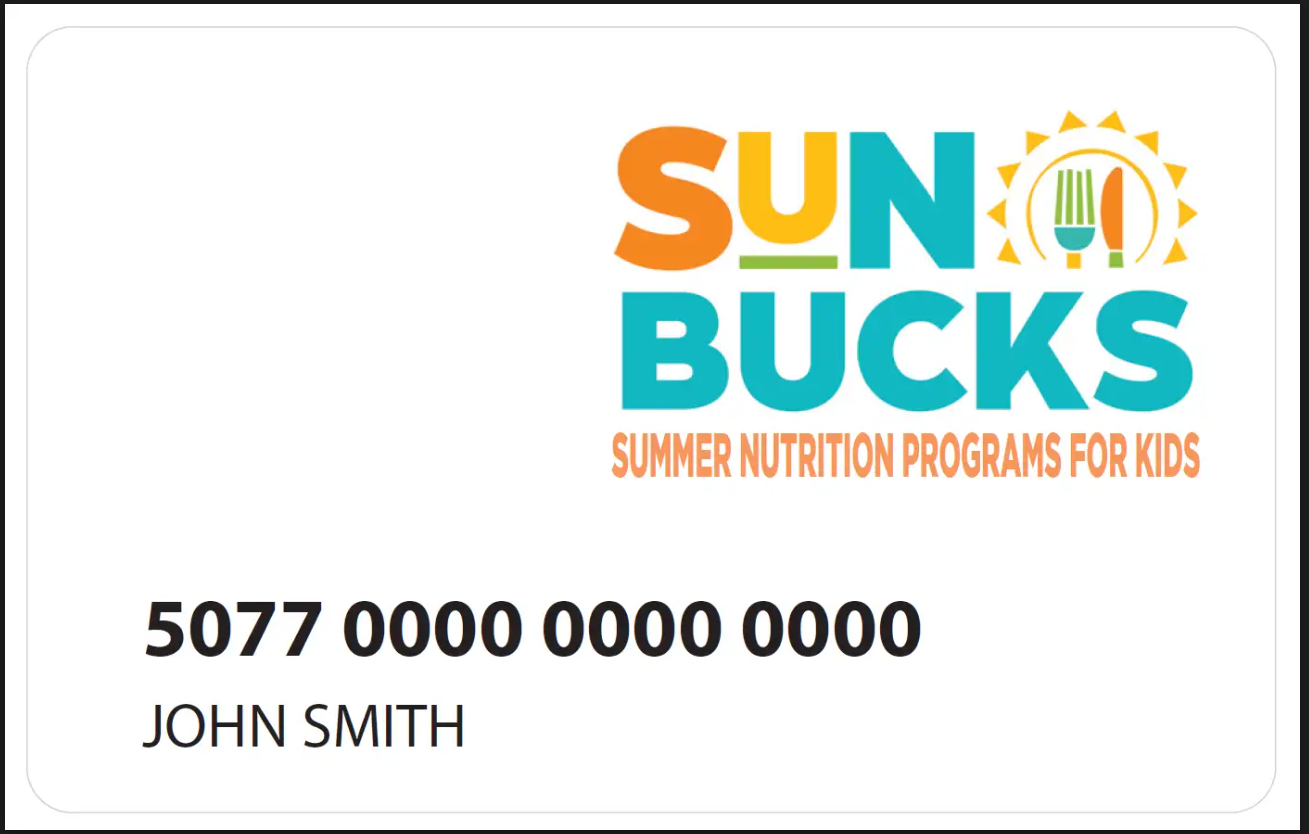
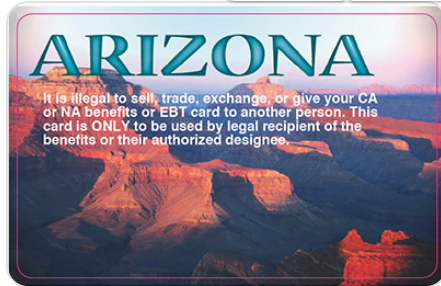
The benefits will be issued on a SUN Bucks card that looks like one of the below.


SUN Bucks Card Image

OR:


Summer 2024 EBT Card

Benefit cards will be mailed to eligible children at the address provided by the school beginning in summer 2026. Once mailed, it may take a few weeks to reach your address. Please confirm your mailing address with your school district.

Once SUN Bucks benefits have been issued, households will receive a letter from DES in the mail, similar to the ones linked below. Please make sure to review and keep this letter.

  • Sample letter to households currently receiving SNAP/TANF benefits (English)/(Spanish) [Templates coming soon]
  • Sample letter to households who previously received SUN Bucks (English)/(Spanish) [Templates coming soon]
  • Sample letter to households receiving SUN Bucks benefits (new case builds) (English)/(Spanish)[Templates coming soon]

How do I use my SUN Bucks benefits?

Using Your SUN Bucks Benefits:

  • Use your SUN Bucks before they expire: SUN Bucks benefits expire 122 days from the date the benefits are made available on your SUN Bucks card. Federal regulations do not allow benefits to be replaced after they have expired/expunged. 
  • Setting up Your SUN Bucks card: Once you receive your card in the mail, you will need to call 1-888-997-9333 to set up the PIN for your EBT card. You will need the 16-digit card number you received, the date of birth of the person named on the card, and the 8-digit case number on the letter from DES. 
  • Using your benefits to buy food: Once the funds are available on your card, you can buy eligible food at grocery stores, farmers' markets, and other authorized SNAP retailers. To locate participating retailers, you may visit www.fns.usda.gov/snap/retailer-locator
  • Can I give my SUN Bucks card to someone else to use to buy groceries for themselves? SUN Bucks benefits are specific to the household and cannot be given to another person. 
  • Replacing your SUN Bucks card or changing your PIN: To check your SUN Bucks card balance, change your PIN, or request a replacement EBT card, call 1-888-997-9333. 
  • For more information about using your Arizona EBT Card: Please view DES' "How to Use Your Arizona EBT Card" brochure (English) (Spanish). 

What if I don't want my benefits or if I'd like to opt out?

How do I decline SUN Bucks benefits? To opt out of 2026 SUN Bucks benefits, complete the parent and student information in the SUN Bucks application. At the top of the "Student" page, check the box labeled “I would like to opt out of receiving SUN Bucks benefits.” Click here to begin the opt out process.

What should I do if I received a SUN Bucks card in error? If you received a SUN Bucks card, but your child is not certified for free or reduced-price school meals, and you believe you are not eligible for these benefits, please do not use the card. If you received the card in error, please destroy the card. 

What to do if my benefits were stolen?

What should I do if I suspect my benefits were used fraudulently or stolen? Federal regulations do not allow for the replacement of stolen SUN Bucks benefits. If you have lost your card or your card has been stolen, call 1-888-997-9333 (TTY: 1-800-367-8939) IMMEDIATELY, and don't hang up until they have deactivated your card.

Who do I contact if I have further questions?

If you have questions on the topics listed below, please contact the SUN Bucks hotline at 1-833-648-4406.

  • Assistance with the SUN Bucks case number
  • Date(s) of benefit issuance. Report a change of address
  • Child missing on your SUN Bucks case
  • Information on SUN Bucks eligibility, how to apply, or how to file an appeal
  • How to opt out
  • Frequently Asked Questions

If you have questions on the topics listed below, please contact the EBT card customer service line at 1-888-997-9333. 

  • Activating your card 
  • Checking card balances 
  • Changing your PIN 
  • Reporting a lost, stolen, or damaged card 
  • Requesting a replacement card 

Please only contact your child's school if you have questions about the following: 

  • Your child's free or reduced-price eligibility status
  • The date of birth listed for your child 

Please only contact your child's school if you need to make updates to the following: 

  • Custodial parent or guardian
  • Mailing address

Where can I submit an appeal of my benefits decision?

If you disagree with the decision made about your SUN Bucks benefits by the State of Arizona, you have the right to appeal. 
 
TO SUBMIT AN APPEAL ONLINE:
[Coming Soon]
 
TO SUBMIT AN APPEAL BY US MAIL:
To mail in an appeal, please print the form linked below, complete, and mail the completed form to ADE at the address below. 
 
SUN Bucks Benefit Review/Appeal Form (English)
SUN Bucks Benefit Review/Appeal Form (Spanish)


Attn: HNS SUN Bucks  
Arizona Department of Education, 
1535 W. Jefferson St. Bin #7 
Phoenix AZ 85007

Staying on Track Monthly Webinar

Staying on Track Monthly Webinar

The Staying on Track monthly webinar is intended for School Food Authorities (SFAs) operating the National School Lunch Program (NSLP), Seamless Summer Option (SSO), or the Summer Food Service Program (SFSP). All regulations are specific to operating the programs under the direction of ADE.  

The Staying on Track Webinar Series reviews key HNS communications sent to program directors over the past month. The monthly recap will: 

  • Ensure vital emails were not overlooked 
  • Allow HNS to provide additional details on important topics 
  • Provide program directors with an opportunity to ask for clarification 

Upcoming Webinars

Training Type Training Title & Date Registration Link
Live Webinar

Staying on Track - September 1, 2026

(1:30 PM MST)

Register here


Past Webinars

Training Type Training Title Training Length
Webinar August 2026 (Recording) (Slides) 1.0 hour
Webinar July 2026 (Recording) (Slides) (Q&A) 1.0 hour
Webinar June 2026 (Recording) (Slides) (Q&A) 1.0 hour
Webinar May 2026 (Recording) (Slides) (Q&A) 1.0 hour
Webinar April 2026: Summer Edition (Recording) (Slides) (Q&A) 1.0 hour
Webinar March 2026 (Recording) (Slides) (Q&A) 1.0 hour
Webinar February (Recording) (Slides) (Q&A) 1.0 hour
Webinar January 2026 (Recording) (Slides) (Q&A) 1.0 hour
Webinar December 2025 (Recording) (Slides) 1.0 hour
Webinar November 2025 (Recording) (Slides) (Q&A) 1.0 hour
Webinar October 2025 (Recording) (Slides) 1.0 hour
Webinar September 2025 (Recording) (Slides) (Q&A) 1.0 hour
Webinar August 2025 (Recording) (Slides) (Q&A) 1.0 hour
Webinar July 2025 (Recording) (Slides) (Q&A) 1.0 hour
Webinar June 2025  (Recording) (Slides) (Q&A) 1.0 hour
Webinar May 2025 (Recording) (Slides) (Q&A) 1.0 hour
Webinar April 2025: Summer Edition (Recording) (Slides) (Q&A) 1.0 hour
Webinar March 2025 (Recording) (Slides) (Q&A) 1.0 hour
Webinar February 2025 (Recording) (Slides) (Q&A) 1.0 hour
Webinar January 2025 (Recording) (Slides) (Q&A) 1.0 hour
Webinar December 2024 (Recording) (Slides) (Q&A) 1.0 hour
Webinar November 2024 (Recording) (Slides) (Q&A) 1.0 hour
Webinar October 2024 (Recording) (Slides) (Q&A) 1.0 hour
Webinar September 2024 (Recording) (Slides) (Q&A) 1.0 hour
Webinar August 2024 (Recording) (Slides) (Q&A) 1.0 hour
Webinar July 2024 (Recording) (Slides) (Q&A) 1.0 hour
Webinar June 2024 (Recording) (Slides) 1.0 hour
Webinar May 2024 (Recording) (Slides) 1.0 hour
Webinar April 2024 (Recording) (Slides) 1.0 hour
Webinar March 2024 (Recording) (Slides) 1.0 hour
Webinar February 2024 (Recording) (Slides) 1.0 hour


School Meal Menu Requirements

School Meal Menu Requirements

Schools that participate in any Child Nutrition Program are required to follow a set of regulations or rules, around the foods they are allowed to serve. Meals and menus served in schools are designed to be both healthy and appealing for the students that eat them. Schools participating in the National School Lunch and School Breakfast Programs must meet the following standards: 

  • More fruits and vegetables: Since 2012, schools offer students larger portions of fruits and vegetables with every lunch. Vegetable choices must include weekly offerings of legumes, dark green and red/orange vegetables. Every school breakfast must offer students a full cup of fruits or vegetables. Students are required to take at least one half-cup serving of fruits or vegetables with every school breakfast and lunch.  
  • Whole grains: All grains offered with school meals must be whole grain-rich.  
  • Sodium limits: Schools must gradually reduce sodium levels in school meals to meet limits. 
  • Limits on unhealthy fat: Meals cannot contain added trans-fat and no more than 10 percent of calories can come from saturated fat. 
  • Low-fat and fat-free milk: Every school meal offers one cup of fat-free or 1% milk. 
  • Calorie limits: School meals must meet age-appropriate calorie minimums and maximums: 
Grades Breakfast Lunch
K-5 350-500 calories 550-650 calories
6-8 400-550 600-700
9-12 450-600 750-850

It seems like my child’s school isn’t always serving what shows on the school menus. What is going on?

Schools are facing the same challenges many grocery stores and other places are having with getting all the food and supplies they need. When this happens, school nutrition professionals are doing everything they can to serve healthy meals to your child. Sometimes that means needing to swap out some foods for others because some foods are easier to get. Please be patient with the school nutrition professionals striving to serve our kids. They are committed to making sure our kids get the healthy meals they depend on during this challenging time.

School Year 2025-2026

School Year 2025-2026

Is there any way for schools to serve meals to all students for free?

Some schools use a program called the “Community Eligibility Provision” or “Special Assistance Provision” that helps them serve all meals free. Contact your local school to see if they are part of that program.

My child’s school is charging for meals again, but I can’t afford to pay. Is there a way my child can get meals for free?

Yes. There are still many ways children can get free meals. Children are automatically eligible for free meals if anyone in their household gets SNAP, TANF, or FDPIR benefits. Schools should let you know if your child is automatically eligible.

You can also fill out an application to qualify for free or reduced-price meals. Children experiencing homelessness, children in foster care, runaway youth, or children of migrant workers all qualify for free school meals when their household fills out an application. Children can also qualify for free or reduced-price meals through an application if their household’s income is under a certain limit. Schools will help you understand if you qualify for free or reduced-price meals based on the information you put on their school meal application.

When can I send in an application to see if my child can eat for free?

Now! Contact your local school to access a household application.

Collecting Free and Reduced-Price Data for School Year 2024-2025

Collecting Free and Reduced-Price Data for School Year 2024-2025

For the 2024-2025 school year, in most school districts, families will need to complete an application through their school to determine if their household is eligible for free or reduced-price school meals, as was done last year. Things to know:

  • The ESEA (Title 1) Income Eligibility Forms (alternate income application) cannot be used to certify a student as free or reduced-price eligible in the National School Lunch Program (NSLP). Additionally, the NSLP 510 non-profit food service account may not be utilized to cover the cost of distributing or processing ESEA Income Eligibility Forms.
  • For Summer 2025, USDA will not allow the use of PY25 ESEA Title 1 Income Eligibility Forms data to identify and automatically issue eligible students the 2025 Summer EBT (SUN Bucks) one-time $120 food assistance benefit. Instead, eligibility status and source of eligibility for all enrolled students in both the NSLP and SBP must be reported to the Food Service Program Association in AzEDS.
  • Determinations made from school meal Household Applications for Free and Reduced-Price Meals and Direct Certification just be used for AzEDS reporting.
  • For sites/districts participating in a Special Provision Option on an approved cycle, the ESEA (Title I) Income Eligibility Forms may be used to collect free and reduced data for AzEDS reporting only during non-base years or an active CEP cycle and the cost of processing the ESEA (Title I) Income Eligibility Forms must be paid for with funds outside of the non-profit food service account.
  • The Arizona legislature appropriated one-time funding to reduce or eliminate copayments that would otherwise be charged to children eligible for reduced-price meals during the 2024-2025 school year. Under traditional operations of the NSLP and SBP, families with students who qualify for reduced-price meal benefits may incur a fee of up to $0.40 for each lunch and up to $0.30 for each breakfast. The state appropriation will be provided to the NSLP and SBP operators by ADE as a per-meal reimbursement. If the appropriated amount is insufficient to cover all meals served to students certified as eligible for reduced-price meal benefits, ADE will reduce the funding proportionately and notify the impacted SFAs. See HNS 06-2024.

SFSP Prospective Entity Form for Community Organizations

SFSP Prospective Entity Form for Community Organizations

  • Current Summer Food Service Programs
  • Entity Information
  • Training Requirements
  • Organizational Forms
  • Complete

Welcome and thank you for your interest in the Summer Food Service Program (SFSP).  The purpose of this federally funded program is to provide children ages 18 and younger with nutritional meals during the summer while school is out of session.

The first step towards participating in the SFSP program is to complete this SFSP Prospective Entity Form for Community Organizations.  Should you need clarification or assistance during this process, please contact ADE's Health and Nutrition Services Onboarding Team at [email protected] or by calling the Specialist of the Day at 602-542-8700, option 1.

Operator Responsibilities

SFSP operators must be able to assume responsibility for the entire administration of the Program. As a sponsor, an organization at a minimum will:

  • Complete the State Agency’s training
    • A Program administrator and key staff member(s) from each new operating organization are required to complete State Agency training in order for the organization to be eligible to participate in the Program
    • The required training can be found on ADE’s website https://www.azed.gov/hns/sfsptraining
    • Training certificates will be required to be uploaded
  • Locate and recruit eligible sites
  • Hire, train, and supervise staff and volunteers
  • Competitively procure food to be prepared or a vendor for meals to be delivered
  • Monitor all sites
  • Prepare claims for reimbursement
  • Ensure the sites are sustainable 


For organizations not yet ready to take on the responsibilities required of an operator, participation as a site under an existing operator is the best option. This is the most effective way to prepare an organization to become an operator in future years.  To determine site eligibility, you may visit USDA’s CACFP and SFSP Area Eligibility Mapper at https://www.fns.usda.gov/area-eligibility.

Child and Adult Care Food Program (CACFP) Provider Application Change Form

Child and Adult Care Food Program (CACFP) Provider Application Change Form

Complete only the applicable fields on this document to make changes to an existing approved application. If the provider is moving, changing approval types, requesting a name change or transferring, a full application is required with all required supporting documents. 

Sponsor Representative Organizational Details and Contact Information
Sponsor Representative Contact Informaiton
Provider Information
Physical Address:
Section 1 – Provider Details
Provider Details
Has the Provider's Phone number or email address changed?
Backup Provider Details
Is this a new Backup Provider?
One file only.
100 MB limit.
Allowed types: gif, jpg, jpeg, png, bmp, eps, tif, pict, psd, txt, rtf, html, odf, pdf, doc, docx, ppt, pptx, xls, xlsx, xml, avi, mov, mp3, mp4, ogg, wav, bz2, dmg, gz, jar, rar, sit, svg, tar, zip.
Is this to Delete a Backup Provider?
Do you have another Backup Provider to update changes?
I need to make updates to a second Backup Provider
Is this a new Backup Provider?
One file only.
100 MB limit.
Allowed types: gif, jpg, jpeg, png, bmp, eps, tif, pict, psd, txt, rtf, html, odf, pdf, doc, docx, ppt, pptx, xls, xlsx, xml, avi, mov, mp3, mp4, ogg, wav, bz2, dmg, gz, jar, rar, sit, svg, tar, zip.
Is this to Delete a Backup Provider?
Please complete this section if you need to add any new backup provider, update a backup provider's FPC Expiration Date or remove a backup provider. Note: For all new backup providers, please upload fingerprint card (FPC) or application.
Please identify any changes being made to the initial application for any of the sections below.
Section 2 - Provider Application Changes
Do you need to update new hours of care (start time and/or end time)?
Check the day of the week where Hours of Care have been changed (the start time or the end time).
Monday
Tuesday
Wednesday
Thursday
Friday
Saturday
Sunday
Holiday Care Updated Information
Check all that apply:
Providers Own Children
Section 3 – Meal Service
Do you need to update new hours of meal service (start time, end time, and/or frequency)?
1st Shift
Breakfast
How Often?
AM Snack
How Often?
Lunch
How Often?
PM Snack
How Often?
Supper
How Often?
Evening Snack
How Often?
2nd Shift
Breakfast
How Often?
AM Snack
How Often?
Lunch
How Often?
PM Snack
How Often?
Supper
How Often?
Evening Snack
How Often?
Attestation
I, the Sponsor Representative, hereby certify any of the above changes made to the initial application have been communicated by the provider to the sponsoring agency and have been approved effective on this date.
Change request was received from provider by

School Food Authority Form for Prospective School Nutrition Program Operators

School Food Authority Form for Prospective School Nutrition Program Operators

  • Current Before You Begin
  • Contact Information
  • Training Requirement
  • Organizational Forms
  • Complete
Before you begin

Thank you for your interest in operating the School Nutrition Program (SNP). The first step in the process will be completing this form.

This form must be filled out in its entirety. It is unable to be saved and returned to later. Before you begin, make sure the applicable forms below have been completed. If you have any questions, please contact (602) 542-8700 or email [email protected]

All program forms needed can be found at Required Entity Organization Application Forms


School Nutrition Programs:

  • National School Lunch Program (NSLP): National School Lunch Program (NSLP): This program, authorized by the National School Lunch Act, provides meal reimbursement and donated food assistance to be used to assist schools in serving nutritious lunches to children each school day. Eligible entities agree to operate a nonprofit lunch program and claim for meals which comply with state and federal guidelines. Meals are reimbursed according to the income eligibility of the students participating in the program.
  • School Breakfast Program (SBP): Like NSLP, this program provides meal reimbursement to eligible entities for breakfast meals served at or close to the beginning of the school day which comply with state and federal guidelines. Program operators must also operate NSLP.
  • Afterschool Care Snack Program (ASCSP): This program provides meal reimbursement to eligible entities for snacks served in afterschool care programs which comply with state and federal guidelines. Program operators must also operate NSLP.
  • At- Risk Afterschool Meals for School Food Authorities: This program is a component of the Child and Adult Care Food Program (CACFP) which provides meal reimbursement to eligible entities for meals and/or snacks served to children through an approved afterschool care program located in a low-income area which comply with state and federal guidelines.  Program operators may provide meals and/or snacks after the school day, on weekends or holidays, including vacation periods (ex. spring break), during the regular school year.
  • Special Milk Program (SMP): The SMP provides milk to children in schools, childcare institutions, and eligible camps that do not participate in other federal child nutrition meal service programs. The program reimburses schools and institutions for the milk they serve.