Comprehensive School Mental Health Systems
Building strong safety measures in schools requires strong mental health systems that support students' emotional well-being. By integrating mental health services into the school culture, educators and administrators can proactively address the emotional and behavioral needs of students, reduce incidents of violence, and foster a climate of trust and resilience. At the Arizona Department of Education, Project AWARE, a federal initiative, supports the development and implementation of a comprehensive mental health system to decrease youth violence and support the healthy development of school-aged youths. Project AWARE seeks to build and expand the capacity of State Educational Agencies, in partnership with State Mental Health Agencies, overseeing school-aged youth.
School Mental Health Professionals
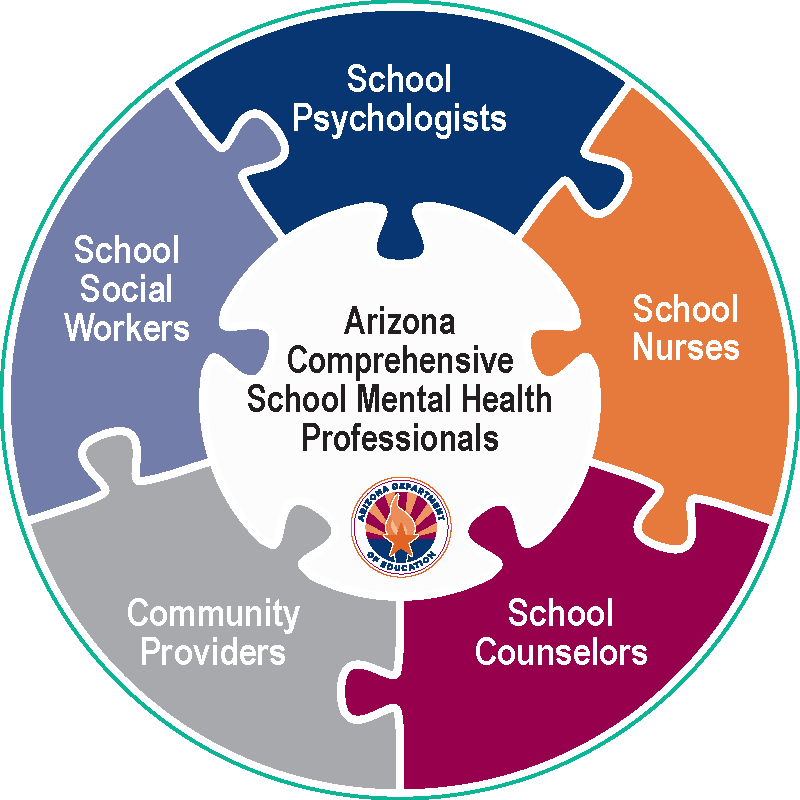
School Mental Health Professionals play a vital role in fostering the emotional, psychological, and social well-being of students across Arizona’s educational landscape. These professionals, including school counselors, social workers, psychologists, and nurses, are essential to creating safe, comprehensive, and academically enriching environments. They provide a range of services from prevention and wellness education to targeted interventions and crisis response, all within a multi-tiered system of supports (MTSS). To help schools better understand and utilize these roles, the Arizona Department of Education (ADE) has developed the School Mental Health Professionals’ Resource Guide.
New! Suicide Prevention Training for School Mental Health Professionals
Arizona Suicide Prevention Training for School Mental Health Professionals
School mental health professionals play a critical role in keeping students safe, often being the first to identify when a student is at risk. Yet, their role is too often overlooked in safety planning. To address this need, The Jed Foundation (JED) and the Arizona Department of Education (ADE) have partnered to create a two-hour, eight-module online training that equips school counselors, social workers, psychologists, nurses, and other school personnel with the tools to:
- Recognize the mental health continuum and common mental health challenges Arizona students face.
- Engage in supportive conversations with students that recognize and respect cultural backgrounds across Arizona communities, ensuring all feel valued.
- Describe how schools and communities can work together as a student support team to improve student mental health, and define your role on the team.
- Identify signs of self-injury and crisis, including signs of suicidal thoughts or intense emotional distress.
- Understand the role of suicide risk screening in a comprehensive prevention approach and learn how to administer screening tools.
- Take action when a student is in crisis by engaging the support team, ensuring immediate safety, and documenting and following school protocols (or helping to establish protocols, when needed).
This 2-hour scenario-based course is an approved training of the Mitch Warnock Act and provides practical, real-world applications, helping school professionals build confidence in supporting students and strengthening school safety.
Important Information Before You Begin
- 120-Day Access: Once you register, you will have 120 days to complete the course. Please plan accordingly to ensure you meet this deadline.
- Registration: Use your school email address to register. Click on the registration link in the one-pager.
- Technical Support: All technical support requests must be submitted through the JED Support Request form.
Sign-Up for the School Mental Health Professionals Listserv
Stay connected to receive communication, collaboration, and resource sharing among professionals committed to supporting the mental health and well-being of students.
Our Work
Building Comprehensive School Mental Health Systems
Comprehensive school mental health systems in schools are coordinated frameworks that integrate mental health services, supports, and education into the school environment. These systems go beyond crisis response, and rather, they incorporate preventative mental wellness measures and provide early intervention and treatment.
Key Components of a Comprehensive Mental Health System Include:
- Universal Supports: Mental health education, awareness, and positive school climate initiatives for all students.
- Targeted Interventions: Small group counseling, mentoring, and skill-building for students at risk.
- Intensive Services: Individual therapy, case management, and wraparound services for students with significant mental health needs.
- Family and Community Engagement: Partnerships with families and local providers to ensure continuity of care and culturally responsive support.
- Staff Training and Support: Professional development for educators on trauma-informed practices, suicide prevention, mental health literacy, and referral pathways.
- Data-Driven Decision Making: Using screening tools, monitoring, and outcome data to guide services and improve the overall mental health and wellness of your school community.
Mental Health Continuum
The Arizona Department of Education’s School Safety Unit recognizes that mental health exists on a continuum from healthy to ill. People may move along this spectrum throughout their lives. Those in the healthy or reacting range often benefit from self-care and social support, while those in the injured or ill range may require professional help to experience relief. Understanding the mental health continuum and integrating it into your school systems emphasizes that mental health is dynamic and varies from person to person over time.
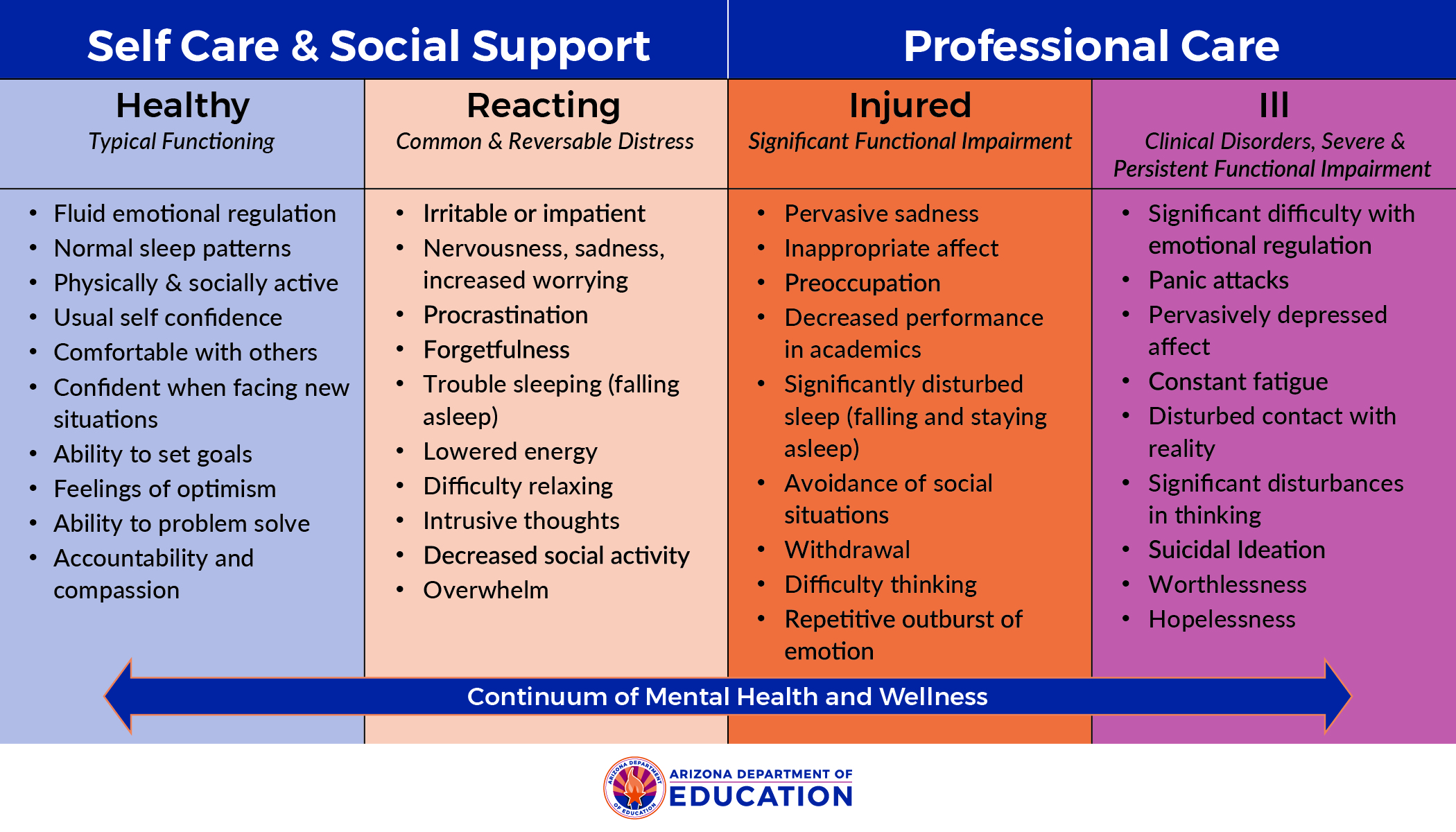
A comprehensive system ensures that mental health is treated as a foundational part of student success. It helps reduce barriers to learning, improves attendance and behavior, and supports overall well-being.
If you would like to learn more or seek support, please feel free to connect with us at [email protected].
School Behavioral Health Partnerships
School behavioral health partnerships are crucial for promoting student well-being, academic achievement, and a safe learning environment. By integrating mental health professionals and services into educational settings, these collaborations help identify and address behavioral and emotional challenges early. Strong partnerships between schools, families, and community health providers create a holistic support system that empowers students to thrive both in and out of the classroom.
In partnership with Arizona Healthcare Cost Containment System (AHCCCS) and Arizona Department of Health Services (ADHS), the ADE Project AWARE team developed the School and Behavioral Health Partnerships Resource Guide, which is intended to assist school districts and behavioral health providers in creating seamless partnerships that support Arizona's youth and families.
Training for Schools, Districts, and Communities
Suicide Prevention Trainings
School personnel may be trained in one or more of the AHCCCS-approved suicide prevention trainings, at least once every three years, to meet the legislative requirements of the Mitch Warnock Act (ARS 15-120).
ADE offers suicide prevention training to school staff and the community. If interested, view the training schedule and request form on the Suicide Prevention webpage.
Neurosequential Model of Education (NME) for School Mental Health Professionals
The Neurosequential Model in Education (NME) draws upon the NMT (a neurodevelopmentally-informed, biologically respectful perspective on human development and functioning) to help educators understand student behavior and performance.
The goals of NME are to educate school staff in basic concepts of neurosequential development and then teach them how to apply this knowledge to the teaching and learning process. NME is not a specific “intervention”; it is a way to educate school staff about brain development and developmental trauma and then to further teach them how to apply that knowledge to their work with students in and outside the classroom, particularly those students with adverse childhood experiences. The Arizona Department of Education hosts virtual training opportunities every quarter. Connect with [email protected] if you are interested in training opportunities.
Helpful links and resources
Access the centralized hub of Arizona-specific and national resources designed to support students, parents, and educators in promoting mental health and wellness.
Contact Us
For additional information, resources, or questions, please contact [email protected].