Contact

Assistive Technology Professional Learning Opportunities

AT/ESS banner

Assistive Technology Professional Learning Opportunities

Assistive Technology Professional Learning Opportunities


Accessible Educational Materials (AEM)

Accessible Educational Materials (AEM)

Accessible Educational Materials (AEM) are materials designed or converted in a way that makes them usable across the widest range of student variability regardless of format. In relation to the Individuals with Disabilities Education Act (IDEA), the term AIM refers to print instructional materials that have been transformed into four specialized formats (audio, braille, digital, and large print text). Sometimes students with disabilities have difficulty accessing print in the same way as their peers. To succeed in school, these students need learning materials presented in a way that works for them. In 2014, the term "accessible educational materials" or "AEM" was expanded to include both print- and technology-based educational materials including electronic textbooks, and related core materials. Practically speaking, the terms AIM and AEM are often used interchangeably. – OCALI AT & AEM Center

AEM or AIM Guidance

Under the Individuals with Disabilities Education Act (IDEA), any student who receives special education services must receive accessible instructional materials when needed to make meaningful educational progress. This is part of the right to a Free Appropriate Public Education (FAPE). Accessible instructional materials must effectively provide the same information that other instructional materials provide.

Under Section 504 of the Rehabilitation Act of 1973, schools must provide instructional materials in alternative formats to a student with a disability if the student needs them to learn.

Who Needs AEM?

Accessible Educational Materials (AEM) are print- and technology-based educational materials, including printed and electronic textbooks and materials that are designed or enhanced in a way that makes them usable across the widest range of learner variability, regardless of format. Accessible formats provide the same information in another form to address the barriers text- based materials can present for some learners. Examples of accessible formats include audio, braille, large print, tactile graphics, and digital text conforming with accessibility standards.

NIMAC / NIMAS

Created by IDEA 2004, NIMAC is a federally funded, online file repository of source files in the NIMAS format. Authorized users can access more than 84,000 K-12 NIMAS files from more than 200 publishers for use in the production of accessible formats such as braille, large print, and digital text for students with disabilities.

NIMAC/NIMAS in Arizona

In Arizona, the Arizona Department of Education, Exceptional Student Services (ADE/ESS) is the only NIMAC/NIMAS authorized user. Schools wishing to access a NIMAC file submit a request to ADE/ESS, which then authorizes a download and assigns the file to an Accessible Media Producer for the creation of the accessible instructional material in whatever format is required/requested.

IDEA Conference Presenter Hub

IDEA Conference Presenter Hub

IDEA 2026 Conference Logo

Arizona’s IDEA Conference includes numerous professional learning opportunities from local and national presenters. This page includes critical information for conference presenters to stay informed about conference deadlines and access resources to guide the creation of accessible, effective, and impactful sessions. ADE/ESS strives to promote full participation by all participants at the IDEA Conference. This includes developing accessible presentations and session materials. All electronically accessible materials will be required to conform to Web Content Accessibility Guidelines (WCAG 2.1), pursuant to Title II of the Americans with Disabilities Act. ADE and National resources are available to support this effort.

Post School Outcomes

Post School Outcomes

Post School Outcomes

Each public education agency (PEA) serving transition-aged students with disabilities must annually participate in the Post School Outcomes (PSO) Survey. This survey, consisting of 14 questions, is administered to students who have exited high school to assess their engagement in post-secondary education, training, or employment. The data collected from the PSO Survey enables comprehensive analysis and enhancement of secondary transition programs at both state and local levels.

Important Dates

January 15: Student lists are available for review and updates.

June 1 – September 30: PSO data Collection season occurs annually.

Announcements

The Arizona Department of Education, Exceptional Student Services (ADE/ESS) provided a memorandum clarifying that for federally required data collections regarding students with disabilities. The Arizona Revised Statutes (A.R.S.) § 15-117 provisions, which outline that informed consent to parents is necessary to administer a survey, do not apply.

For more information, please review the memorandum released July 14, 2023.

PSO Resources

Secondary Transition

Secondary Transition

Secondary Transition

Trending Topics

Graduation Joint Guidance Memo 

Professional Development Wakelet

Register for the Secondary Transition 101 Online Course

Secondary Transition Services Rule Change Webpage

Secondary Transition Resources Page


Learn More About Secondary Transition for Students with Disabilities

Secondary Transition bridges school programs and adult life opportunities, such as higher education, employment, and independent living. This process is guided by a transition plan, as required by Indicator 13 of the IDEA Part B.

The Transition Planning Process:

The transition plan, which is part of the IEP for students with disabilities, is collaboratively developed with the IEP team, emphasizing the student's input. The team helps the student identify measurable postsecondary goals (MPGs), services, and supports using data from age-appropriate assessments. Student strengths are crucial in forming MPGs, and all transition plan requirements must be met.

IDEA Part B Indicators

There are 18 Indicators, four of which are related to Secondary Transition: Indicators 1, 2, 13, and 14

Summarized Descriptions of IDEA Part B Indicators

Support and Technical Assistance

Sign up for email list updates related to Secondary Transition! Please use the link below to also edit or cancel your subscription to the Secondary Transition or Post School Outcomes email lists.


Do you have questions about Secondary Transition? Do you need technical assistance, support, or professional development on Indicator 13? We want to hear from you! 


Secondary Transition Team Contact Information

Secondary Transition specialists provide services statewide and are based in the Phoenix and Tucson areas. For general questions, please email the Secondary Transition Inbox.

Mailing address:
1535 W. Jefferson Street, Bin #24
Phoenix, AZ 85007

Assistive Technology

Special Projects logo

Assistive Technology

Assistive Technology Devices and Services Defined

An assistive technology (AT) device is any “item, piece of equipment, or product system, whether acquired commercially off the shelf, modified, or customized, that is used to increase, maintain, or improve functional capabilities of a child with a disability. The term does not include a medical device that is surgically implanted or the replacement of that device.” [20 USCS §1401(1)(2)34 C.F.R. 300.5]. 

An assistive technology service refers to any service that directly assists a child with a disability in the selection, acquisition, or use of an assistive technology device.

IDEA Conference Lodging

IDEA Conference Lodging

IDEA Conference Logo


We are excited to welcome you to our upcoming Conference, which will take place over two and a half days: Tuesday, August 18, Wednesday, August 19, and Thursday, August 20. View our general daily agenda  for each day’s events, including start and end times. A more detailed schedule will be announced in August.

In addition, we will be hosting Preconference sessions on Monday, August 17, exclusively for specific groups. More details about the Preconference will be shared soon.

Hotel Accommodations at the Grand Hyatt Resort in Scottsdale, AZ
Conference Information

  • Conference Dates: August 18–20, 2026
  • Preconference: August 17, 2026

Room Block Availability:

  • Check-in: Monday, August 17 (after 4:00 PM)
  • Check-out: Thursday, August 20 (by 11:00 AM)

This means participants may reserve accommodation for the nights of Monday, August 17; Tuesday, August 18; and Wednesday, August 19. Please note, guests booking outside the room block dates will be solely responsible for parking fees, service charges, and any other expenses incurred during their stay.

Conference Room Block Rate: $199 per night (excluding taxes)

Reservations must be made through the ADE/ESS IDEA Conference Grand Hyatt Scottsdale booking site to receive the $199 rate.

Last Date to Book at Conference Rate: July 27, 2026

Important Lodging Notice

The conference room block rate for Arizona’s 2026 IDEA Conference is $199/night (not including taxes), which exceeds the state rate of $113/night. This price may mean that your organization will not reimburse the full amount of your lodging expenses unless you request an exception prior to the conference. Participants are encouraged to clarify any lodging reimbursement policies with their respective employer.

Typically, when rooms at a conference hotel are contracted at a higher rate than the State allowable nightly rate, supplemental documentation may be necessary to request an exception. Please use this document to support an exception

Leadership Preconference

Leadership Preconference


2026 IDEA Conference Logo

We’re excited to invite you to an exclusive event designed for Arizona’s special education leaders: the 2026 IDEA Leadership Preconference. This is your opportunity to collaborate, learn, and lead alongside peers who are shaping the future of special education across the state.  

Date:  Monday, August 17, 2026 
Location: Grand Hyatt Scottsdale Resort 7500 E Doubletree Ranch Rd, Scottsdale, AZ 85258 
Time: 12:00 PM – 5:15 PM  

Price: Preconference-only registration is $150. A bundled registration option of $500 is available for attendees who wish to participate in both the preconference and the full IDEA Conference. Anyone interested in participating in the preconference—either as a single day experience or in addition to the full conference—should apply using the preconference application only. 

What to Expect:  

  • Engaging, interactive learning sessions featuring panels, tabletop discussions, and data-informed conversations focused on current trends and proactive district practices 
  • Dynamic networking opportunities with guided tabletop discussions designed to foster collaboration, share expertise, and build meaningful professional connections 
  • Structured moments for leadership reflection and practical problem solving, centered on real world challenges and actionable district level solutions 

Preconference Schedule:  

12:00 – 1:00 PM | Registration and Lunch 

1:00 – 1:15 PM | Welcome 

1:15 – 2:30 PM | Concurrent Session 1   

2:45 – 4:15 PM | Concurrent Session 2  

4:15 – 5:15 PM | Networking Reception and Roundtable Experience

For more information about the concurrent sessions and networking reception, view the 2026 IDEA Leadership Preconference Brochure. 

Who Should Apply?  

  • This event is designed for professionals in special education leadership roles at the district or charter level, including:  
  • Directors, Managers, and Leads of special education programs  
  • Specialists and Teachers on Special Assignment (TOSAs) supporting special education services  
  • Site-based leaders in administrative or leadership roles (formal title not required)  

Guidelines and Requirements:  

  • Each Public Education Agency (PEA) may register up to two eligible leaders. Capacity is capped and final participation decisions will be made by ADE 
  • Priority is given to school-employed, site-based staff  
  • Additional names and on-site based staff will be placed on a waitlist, and if space allows, they will be invited to register.  

Ready to Lead?Apply for Arizona’s 2026 IDEA Director’s Preconference   

Need help with completing registration? Please email the IDEA Conference inbox or join the IDEA Conference Planning Committee during an upcoming office hour. Please register in advance for a virtual office hour time slot. 

Let’s come together to reflect, network, and build stronger systems that impact outcomes for every student in Arizona. We look forward to seeing you there!  

EXTERNAL OPPORTUNITY: Family Transition Navigation Pilot Launching Soon!

EXTERNAL OPPORTUNITY: Family Transition Navigation Pilot Launching Soon!

Family Transition Navigation

Please share this external secondary transition opportunity with students and families.

Planning for life after high school doesn’t have to feel overwhelming.

Encircle Families and Diverse Ability Incorporated are committed to working together to support families at every stage of planning as they navigate transition to adulthood. In order to build on this work, through a partnership with the ADE/ESS, we are excited to share the launch of a new Family Transition Navigation Pilot Program that will be administered by Encircle Families and Diverse Ability Incorporated!

Interested?
For families with a transition-aged student with a disability, the Family Transition Navigation Program is here to help. This no-cost, year-long pilot program supports families and youth with planning, resources and guidance for the transition to adulthood.

For the 2026–2027 pilot year, students must meet specific eligibility requirements:
- Be between ages 14–22
- Be enrolled in a public school
- Have a current IEP

These requirements apply only to this pilot year. 
 Take the first step today by completing the Interest Form
*If you are unsure whether you qualify, we still encourage you to fill out the interest form so that we can connect with you to share other helpful supports and resources.
 For additional information please email: [email protected]      

Secondary Transition Services Rule Change

Secondary Transition Services Rule Change


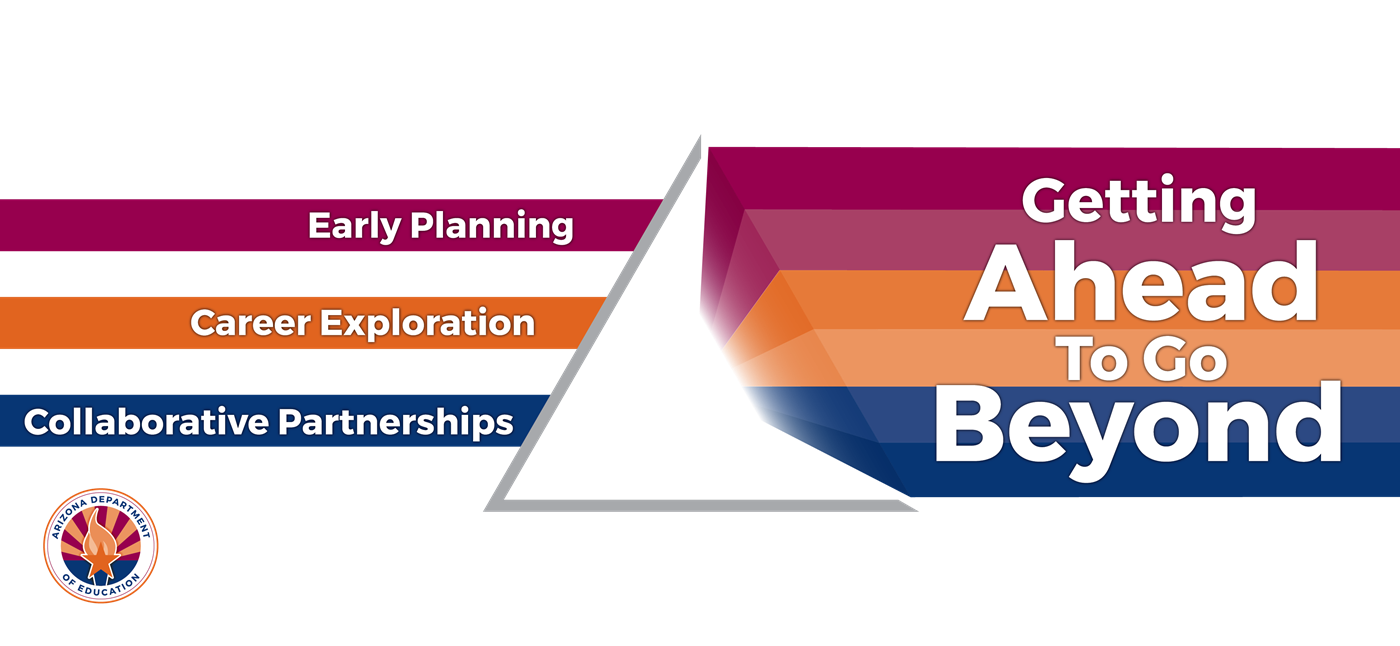
A colorful pyramid with white text

Overview

On October 21, 2024, the Arizona State Board of Education (SBE) approved a board rule change that impacts Individualized Education Program (IEP) requirements, specifically secondary transition services. The newly adopted board rule requires: 

  • Transition services for students to be in effect in the IEP when the child completes 9th grade or reaches age 16, whichever is first, or earlier, as determined necessary by the student’s IEP team. (A.A.C. R7-2-401(G)(4)(A))  
  • The student’s estimated graduation date is to be included in their IEP, aligned with the transition plan. (A.A.C. R7-2-401(G)(4)(A)(c))  
  • The school is to provide written notification to the parent(s) of a student’s anticipated graduation date at least one year before the anticipated high school graduation date. (A.A.C. R7-2-401(G)(4)(A)(c)(i))  

These changes were immediately effective on the date of Board approval (10/21/2024), per Arizona State Board of Education Rulemaking Procedures.  

Implementation

ADE/ESS released a memo that provides background, next steps for public education agencies (PEAs), and the state education agency (SEA) responsibilities and implementation. The approved SBE rule is included for reference. 

Read the ADE/ESS SBE Transition Services Rule Change Memo

ADE/ESS also reviewed the revised rule and memo at the November 2024 Special Education Professionals Check-In. 

View the Secondary Transition Services Rule Change Presentation

In response to the SBE rule change, ADE/ESS revised the AZ-TAS Frequently Asked Questions (FAQ) document on Graduation of Student with Disabilities in Arizona's Schools. The FAQ is included for reference.

AZ-TAS FAQ: Graduation of Students with Disabilities in Arizona's Schools

Secondary Transition Resources

For more information and resources about secondary transition for students with disabilities, visit the Secondary Transition webpage